Since getting our Tribe Bikes we’ve had plenty of questions about the electric assist. In a previous post we covered how far the electric assist can get you. One of the other questions is how bigger/steeper hills can it get you up.
No better way to answer that than give it a test, so we did! The results are below. For those who like to skip to the final page of the book, we made it up a hill with an average gradient of 7% and maximum gradient of 10%. in cycling terms, ‘that’s a steep hill’.
The Test
To get the best result, we had to find the longest and steepest hill. So we found the biggest hill in our area. Measuring 0.94km and rising 68m this gives it an average gradient of 7.2%. There’s barely any respite on this climb, rising the whole way, with a steep pinch at the end, which is around 10%.
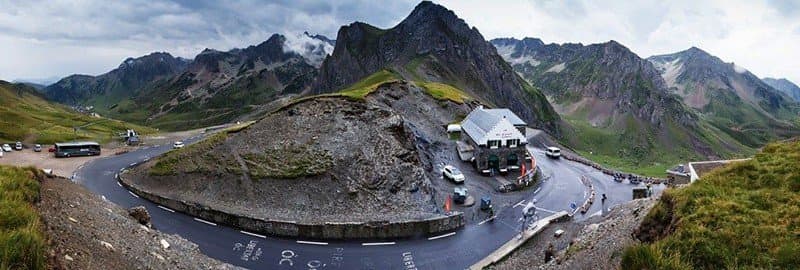
To put this into perspective, the Col Du Tourmalet, a French Pyrenees mountain, famous for making or breaking many riders in the Tour de France has a similar average gradient of 7.4% (although the Col Du Tourmalet climb goes for an eyewatering 17km, and gains over 1,200m in altitude).
The Results
We made it! That’s the main thing that matters, but more below!
The majority of the hill was reasonably easy to pedal up, with electric assist set at level 4-6 (the electric assist has 6 modes with 1 providing the least assist and 6 providing the most), and the bike in 1st or 2nd gear (the bike has 7 gears).
The final pinch which hit 10% gradient got the heart racing. I’ll admit this part was tough, but I was able to make it with a bit of extra effort.
Route and gradient stats
Below is a map of the route we took as well as the slope of the climb. You can see two little spikes in the hill steepness. They look subtle, but they make a big difference.


Speed and Heart Rate
The electric assist certainly helped us maintain a good speed, averaging 10.9km/h and for much of the climb maintaining over 12km/h. It was only the final climb that saw us fall well under 10km/h.
As far as heart rate goes, the climb started out reasonably easy, which saw me in the grey and blue zones. These zones are where your heart rate would be on a brisk walk. Once I hit the first pinch that’s where my heart started working and I spent the rest of the ride in either orange or red zones. I only really started feeling uncomfortable in the final 30 seconds of the ride on the extremely steep section.
Expect to be in the orange zone (80-90% of maximum heart rate) on long runs/jogs, where it can be maintained for a long period of time, but you’ll be breathing heavy. I finished in the red zone. This is 90-100% of your maximum heart rate and is considered maximum effort. Most people can only sustain the red zone for a few minutes. I’m glad the hill finished when it did!


The above in video
I recorded the above for those who want to see us on the climb.
https://www.youtube.com/watch?v=3umPtz6KY24
The verdict
I give the Tribe Bike’s electric assist a pass, on being able to haul us up one of the bigger hills around. Of course there’s other factors that need to be taken into account, including individual fitness and the weight of the ride and cargo.
If you have a big hill you want to get up, you can easily estimate its gradient. Download a free app like Strava and record your hill climb, then divide the total elevation gain by the total length of the climb for the gradient. Eg a 40m elevation gain over a 800m long hill would give a gradient of 5%. GPS is notorious for being poor at estimating elevations so your gradients are a good guess rather than exact science. Gradients of under 7% should be reasonably easy to climb on your Tribe Bike.
Of course, hill climbing chews battery. Keep this in mind, and expect your hilly rides to not get you as far as flat riding.
If you live on a hill and have previously struggled to get out and about without your car, perhaps an electric assist Tribe Bike is for you!
[elementor-template id=”2024″]